
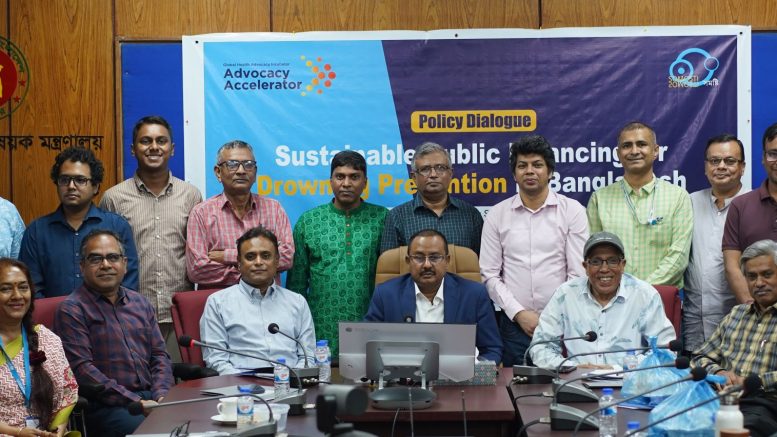
Dhaka, March 29, 2026: The government will allocate budgetary resources to prevent child drowning and will incorporate the issue into national policies with due priority.
Member of the Parliament Fakhar Uddin Ahmed made this commitment today while speaking as the chief guest at a policy dialogue held at the Bangladesh Shishu Academy auditorium in the capital.
The dialogue, titled “Sustainable Public Financing for Drowning Prevention,” was organised by Somosti Media Communication & Development Foundation, with support from the US-based Global Health Advocacy Incubator (GHAI).
Representatives from ministries, development partners, public health experts, academics, journalists, and civil society representatives took part in the event.
Mir Masruruzzaman, executive director of Somosti, delivered the welcome remarks and moderated the session.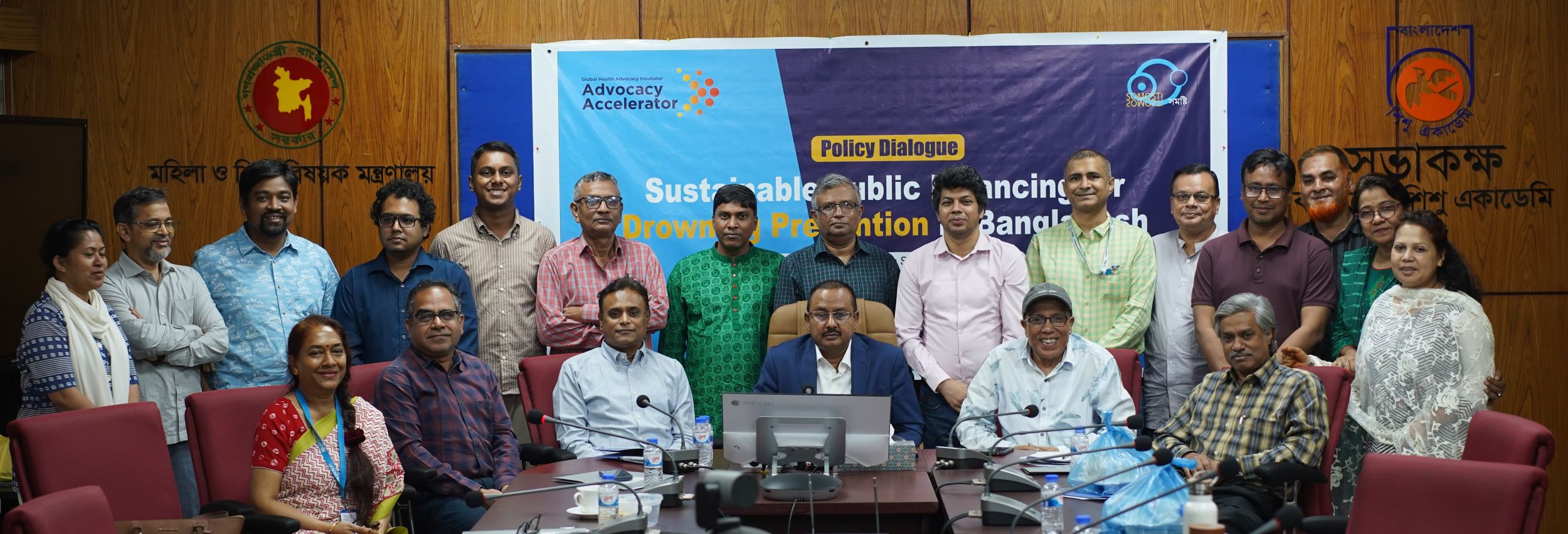
Addressing the programme, Fakhar Uddin Ahmed MP said, “Ensuring the safety of our future generation, our children, is one of the highest priorities of our government. On average, around 40 children die from drowning every day in Bangladesh. This is not just a statistic; it represents the shattered dreams of 40 families. Drowning is the leading cause of death among children aged 1–5 years. It has now become a national crisis. Our hon’ble Prime Minister has always emphasised improving the lives and safety of people. He believes that if even one child dies prematurely, it reflects a major gap in our overall progress. Therefore, we must take effective and decisive action now to address this silent epidemic. We are considering continuing community-based childcare centres. At the same time, every family must be made aware so that ponds and water bodies near homes do not become death traps for children.”
He added, “I will carefully consider the recommendations emerging from this policy dialogue. Our government is committed to including child safety in both the national budget and policy frameworks.”
At the dialogue, a research-based policy brief was presented by Somosti. The brief noted that drowning is one of the leading causes of child mortality in Bangladesh, with more than 14,000 young children dying each year. It highlighted that proven, effective interventions—such as community-based childcare centres, swimming training, and awareness initiatives—have already been successfully implemented by the government. However, these initiatives remain largely project-based and are not included in long-term government budgets, putting their continuity and expansion at risk. The brief stressed the need for sustainable public financing, as well as exploring additional financing avenues for drowning prevention.
The discussion highlighted the scale and severity of drowning as a public health issue in Bangladesh, with particular concern over its impact on children.
Existing government initiatives and responses to drowning prevention were also discussed. Representatives from relevant agencies shared ongoing programmes and emphasised the need to strengthen coordinated efforts in the future.
A panel discussion followed on potential pathways for sustainable financing. Policymakers, health experts, development partners and media representatives took part, emphasising the need for budget prioritisation, multi-stakeholder partnerships and expansion of interventions at the local level.
Participants shared their views and experiences during the open discussion. The session concluded with a collective commitment to strengthening coordinated efforts and ensuring sustainable financing for drowning prevention.
The organisers expressed hope that the recommendations from the policy dialogue would lead to meaningful progress in preventing drowning in Bangladesh.
Among others, the discussion featured Prof Dr Kazi Maruful Islam of the Department of Development Studies at Dhaka University; Sohrab Hasan, editor of Chorcha.com; Md Mamunur Rashid, joint secretary (World Health Wing), Ministry of Health; Kawser Rahman, city editor of Janakantha; Munira Hasan, UNICEF representative; Suchi Syed, assistant editor of Jugantor; Shahnaz Sharmin of Ekattor TV; Rabeya Baby of Ittefaq; Shahinaz Poly, executive committee member of National Press Club; Dr Al-Amin Bhuiyan, researcher at CIPRB; Mrinmoy Masud of Deepto TV, Rizwanul Haque Khan, Bangladesh programme manager of Synergos; Sukannya Amir of Channel One; and others.