
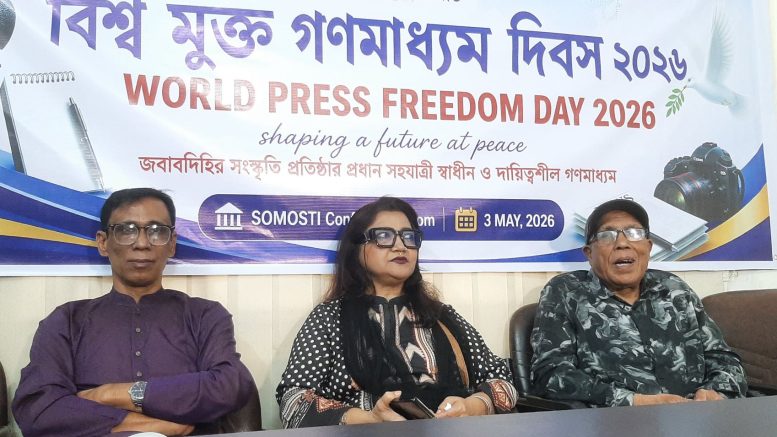
Dhaka, May 3, 2026: Without ensuring the safety and protection of journalists, the space for free and independent media will continue to shrink, speakers said at a discussion marking World Press Freedom Day in Dhaka. They stressed that journalists should not have to face fear, harassment, or insecurity for carrying out public interest reporting, and that protecting media freedom is a shared responsibility of the government, media institutions, journalist organisations, civil society, and legal support actors.
The discussion was organised by Somosti Media Communication & Development Foundation and brought together senior editors, journalists, representatives of journalist associations, lawyers, and civil society members to reflect on the current challenges facing journalists in Bangladesh and the importance of creating a safer environment for responsible journalism.
The session was moderated by Mir Masruruzzaman, Executive Director of Somosti. Speakers included veteran journalist and Editor of Chorcha Sohrab Hasan; Zahid Newaz Khan, Chief Executive Editor of Channel i; Khairuzzaman Kamal, Executive Director of the Bangladesh Human Rights Journalists Forum; Shuchi Sayed, Assistant Editor of Daily Jugantor; Sharmin Rinvy, Editor of Swadhin Media; Shahnaz Poly, Member of the Management Committee of the National Press Club; Shahnaz Sharmin, Special Correspondent of Ekattor TV; Rita Bhowmik, Senior Reporter of Bangla Affairs and Staff Correspondent of Presenza; Advocate Nigar Sultana from the Bangladesh National Women Lawyers’ Association; Advocate Mamunur Rashid Mamun; Rezaul Haque, Director of Somosti; and Zahidul Haque Khan, Programme Coordinator of Somosti.
Speakers noted that journalists in Bangladesh continue to face different forms of pressure, including legal harassment, intimidation, professional insecurity, and institutional challenges while carrying out their work. They said such conditions not only affect journalists personally but also weaken public access to accurate and accountable information.
Speaking at the event, Sohrab Hasan said that whenever governments change, some journalists become closely aligned with those in power and attempt to dominate the media space. He said this does not create a healthy environment for journalism and limits the growth of independent and professional reporting. He also questioned whether governments themselves always demonstrate the responsible behaviour they expect from journalists.
Zahid Newaz Khan raised concern over increasing incidents of harassment and legal action against journalists after the political developments of 5 August 2024. According to him, around 500 journalists faced different forms of persecution, while at least 250 journalists were named in murder cases. He referred to a case where even a reporter who was live on official assignment in front of Bangabhaban on the afternoon of 5 August was later accused in a murder case. He also mentioned incidents involving the cancellation of registrations of media outlets and urged the current government to take effective steps to improve the situation and restore confidence among media professionals.
Khairuzzaman Kamal said journalists play an important role in protecting citizens’ rights and raising public concerns. Therefore, he added, protecting the rights and safety of journalists should also be considered a collective responsibility.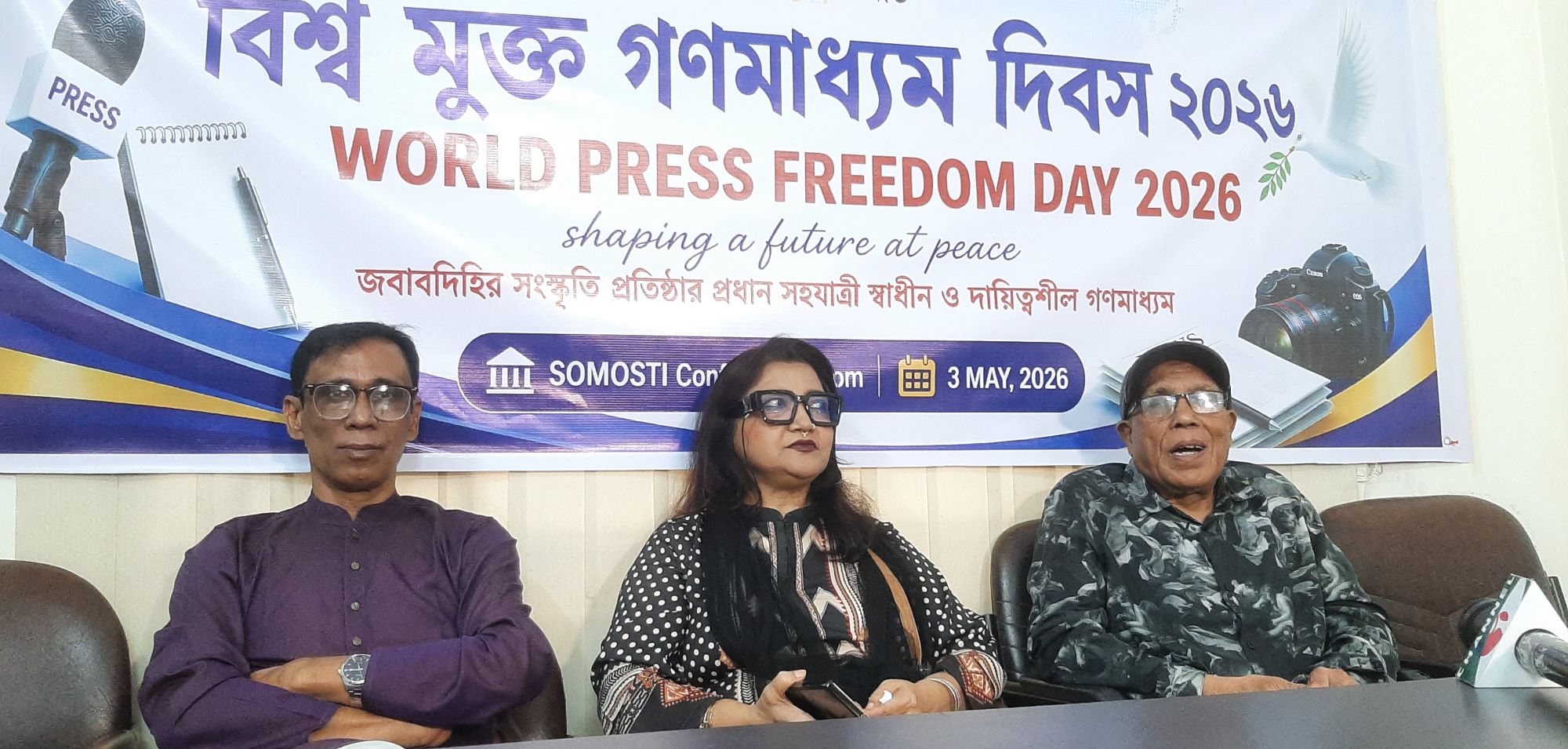
Shuchi Sayed said media freedom is harmed not only by outside interference but also by unethical practices and lack of proper knowledge within sections of the profession. She stressed the importance of strengthening professional standards and responsible journalism.
Sharmin Rinvy highlighted the pressure journalists sometimes face from media institutions themselves. She said journalists are occasionally expected to meet demands that may conflict with professional ethics and values. To ensure responsible and independent journalism, she emphasised the need for professional security, fair wages, and supportive working conditions for media workers.
Shahnaz Poly said society places high expectations on journalists, but when journalists face threats or risks, they often do not receive enough support. She called on civil society organisations to become more active in standing beside journalists during difficult situations.
The discussion ended with a shared call for stronger cooperation among journalists, media organisations, civil society groups, and policymakers to ensure a safe and enabling environment for ethical, independent, and public interest journalism in Bangladesh.