
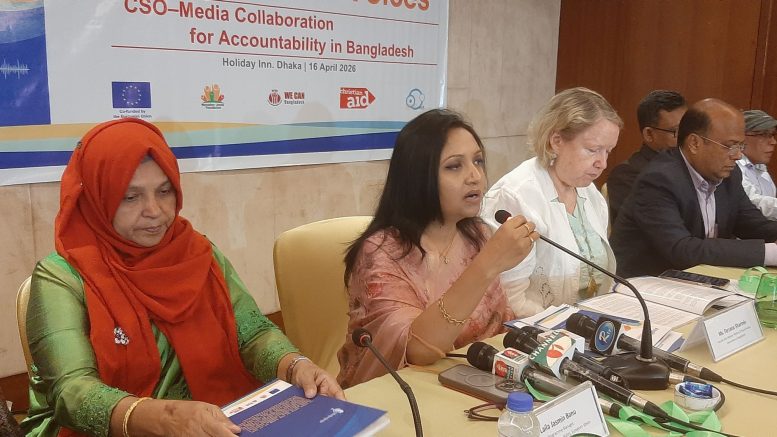
Dhaka, 16 April 2026: Speakers at a national seminar called for more regular, in-depth, and representative media coverage of issues affecting marginalised communities in Bangladesh. They stressed that stronger and more sustainable collaboration between civil society organisations (CSOs) and the media is essential for strengthening accountable governance.
The remarks were made at a national seminar organised by Somosti under the European Union co-funded project, “Expanding Civic Space through Active CSO Participation and Strengthened Governance System in Bangladesh (ECSAP),” implemented by Christian Aid.
The event was moderated by and opened with welcome remarks from Mir Masruruzzaman, Executive Director of Somosti.
State Minister for Social Welfare Ms. Farzana Sharmin MP attended the programme as the chief guest. She said, “The government is working for the development of disadvantaged people, but research is extremely important to understand their real situation. Evidence-based policymaking can make interventions more effective. To ensure the flow of information, a strong bridge is needed among development organisations, civil society, and the media.” She further added, “Working for these communities is not charity. Sustainable development is not possible by leaving them behind.”
The guests also unveiled the research report titled “Amplifying Marginalised Voices for Accountability: The Role of Civil Society Organisations and Media,” which was conducted using a mixed-method approach including surveys, focus group discussions, expert interviews, and media analysis. A summary of the research findings was presented by Rezaul Haque, Research Director of Somosti.
The research found that issues affecting marginalised communities are reflected in the media irregularly and mostly through event-driven coverage. As a result, their everyday realities, structural inequalities, and service-related challenges fail to receive sustained attention in national discourse. The study also identified a lack of contextual and in-depth reporting, along with the limited presence of the communities’ own voices in news coverage, as major challenges.
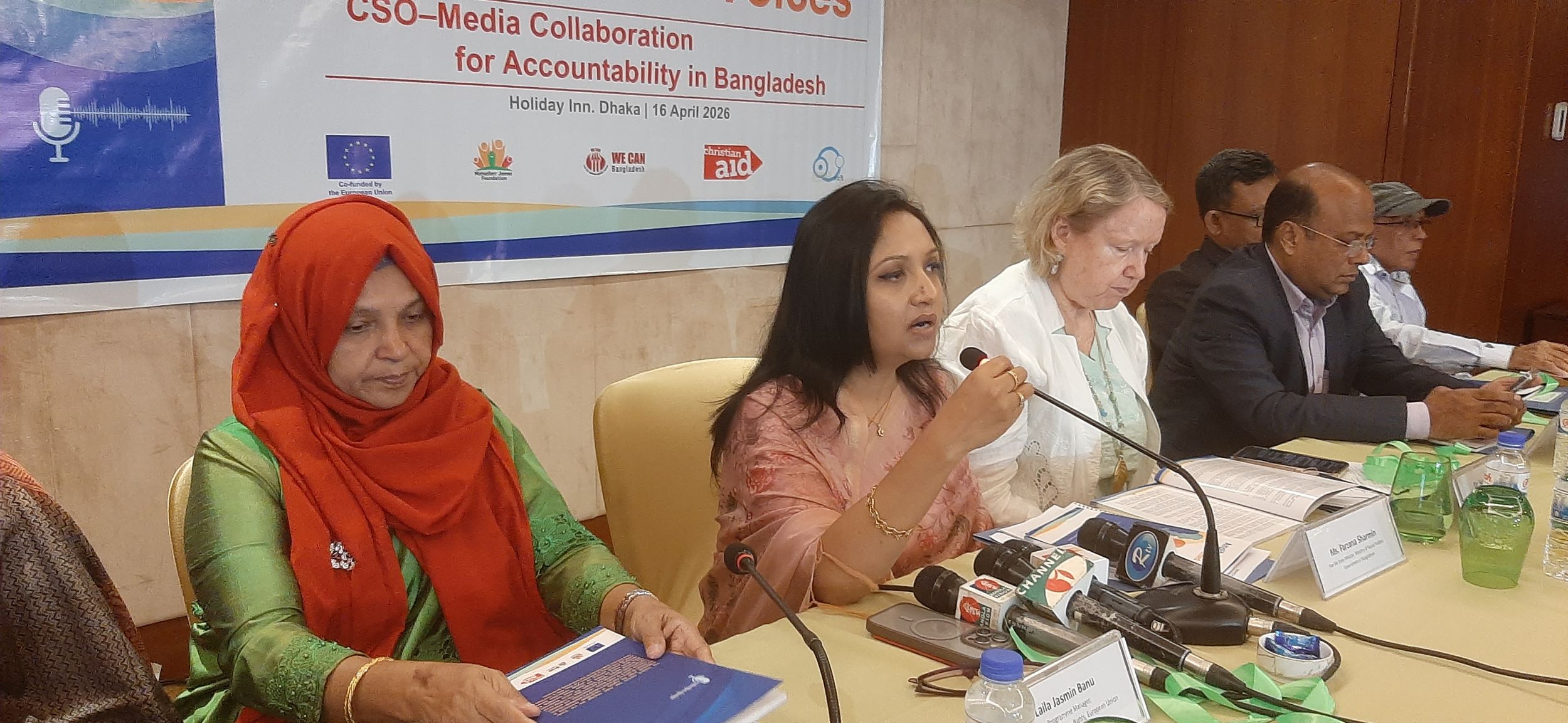
State Minister for Social Welfare speaks at the event.
The study further found that although communication exists between CSOs and the media, it is often informal, fragmented, and project-based, limiting the development of strategic and sustainable collaboration. At the same time, limited time and resources, editorial priorities, and the risks associated with covering sensitive issues also influence news coverage.
The recommendations of the study highlighted that more coordinated and structured initiatives are needed among CSOs, media, government institutions, and development partners to effectively amplify marginalised voices in the public sphere. These include treating communication as an integral part of programmes, strengthening evidence-based storytelling and reporting, supporting local journalism and participatory media platforms, and making information flows more inclusive and accessible.
Laila Jesmin Banu, Programme Manager of the European Union, emphasised the importance of ensuring the direct participation of marginalised communities and called on media professionals to become more sensitive in their reporting.
Dr. Susan Vize, Representative of UNESCO Bangladesh, said that alongside mainstream media, community radio and social media platforms are playing an increasing role. However, she noted that mainstream media must act more responsibly to counter the negative impacts of social media.
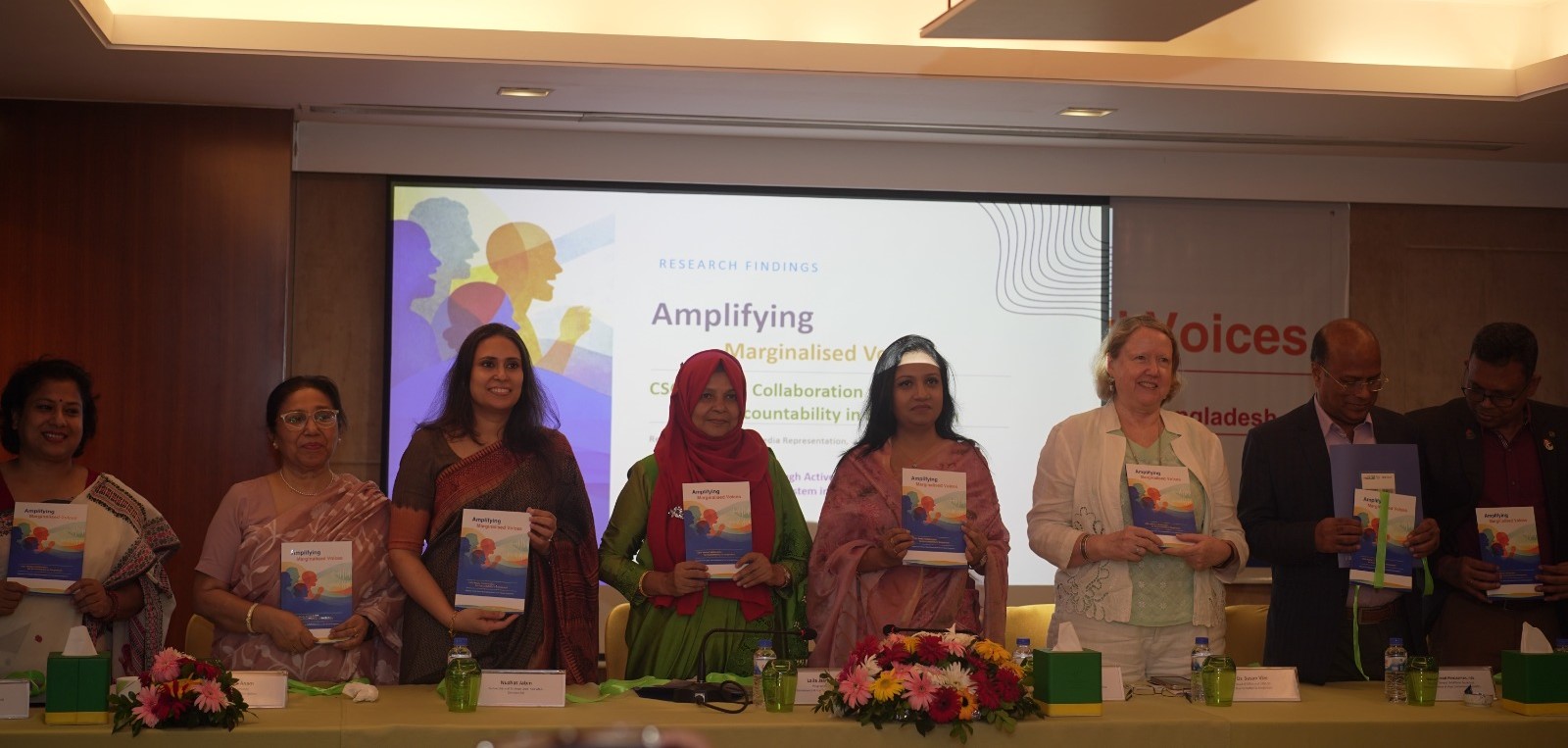
Guests unveil the research report.
Nuzhat Jabin, Partnership and Strategy Lead of Christian Aid, said that there is a need to reduce the existing gap between media and development organisations in order to strengthen the voices of marginalised people.
Shaheen Anam, Executive Director of Manusher Jonno Foundation, said that the media should highlight not only the deprivation faced by marginalised communities but also their achievements and resilience.
Barrister Md. Khalilur Rahman Khan, Director General of the NGO Affairs Bureau, and Mohammad Hiruzzaman, Director General of the National Institute of Mass Communication, also spoke at the event.
Other speakers emphasised the importance of strengthening coordinated initiatives among CSOs, media, government institutions, and development partners so that issues affecting marginalised communities can be more systematically reflected in the public sphere and contribute to accountable governance.
Participants also called for continued dialogue, coordination, and collaboration among different stakeholders to implement the recommendations of the research.